Low-Stimulation Spaces
Low stimulation spaces are quiet environments designed to reduce sensory input and provide a calm place for people to rest or decompress. These spaces help make events and public environments more accessible for individuals who experience sensory sensitivities, anxiety, migraines, or sensory overload.
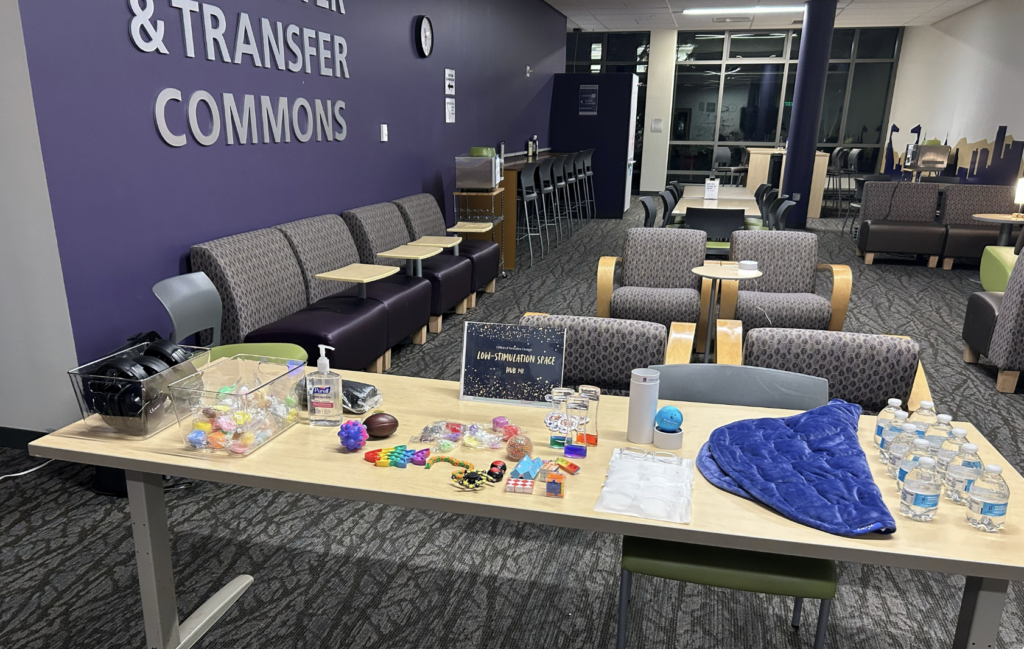
[Image description: A low stimulation space set up in the Commuter and Transfer Commons featuring a table with sensory tools including fidget toys, stress balls, noise-canceling headphones, a weighted blanket, water bottles, and hand sanitizer. Comfortable seating and quiet lounge furniture are arranged nearby to provide a calm space away from the main event environment.]
When Might Someone Use One?
- Students or attendees may use low stimulation spaces when they:
- Feel overwhelmed by noise or crowds
- Experience sensory sensitivities (e.g., autism, ADHD, migraines)
- Need a quiet moment to reset or regulate emotions
- Feel anxious or fatigued during events
- Providing these spaces helps create more inclusive and accessible environments.
Key Elements of a Low Stimulation Space
A low stimulation space should minimize sensory input and provide a calm atmosphere. Common elements include:
- Soft or dim lighting (avoid bright fluorescent lighting)
- Comfortable seating such as chairs, cushions, or bean bags
- Quiet environment away from loud event areas
- Minimal visual clutter and neutral colors
- Sensory tools such as fidget items, stress balls, or noise-reducing headphones
- Clear signage indicating the purpose of the space
- Optional calming activities like coloring sheets or puzzles
How to Set Up a Low Stimulation Space
When creating a low stimulation space for an event:
- Choose a quiet location away from high-traffic or noisy areas.
- Control lighting by using lamps, dim lighting, or natural light where possible.
- Provide comfortable seating so people can sit or rest comfortably.
- Limit noise and distractions by keeping conversations quiet and avoiding loud music.
- Include a small sensory kit with items like fidgets, coloring materials, or stress balls.
- Add clear signage so attendees know the purpose of the space and how to use it respectfully.
- Make your room “scent sensitive” and ask visitors not to wear products with strong fragrances while visiting.
Signs of Over-Stimulation
- Restlessness
- Agitation or anger
- Stiffening of muscles
- Grimacing facial expressions
- Cognitive confusion
- Fidgeting
Campus Resource: Wellness Room at Odegaard Library
Students looking for a quiet and calming space on campus can visit the Wellness Room in Odegaard Undergraduate Library.
https://guides.lib.uw.edu/Odewellness/wellnessroom
Location
Odegaard Undergraduate Library
Room 326 (3rd Floor)
Open to current UW students with a Husky Card
If you need any additional support or resources, please contact the Office of Inclusive Design (asuwoid@uw.edu)